Feeds:
Pos
Komentar

Thank you very much to Elsevier Journal of Engineering Applications of Artificial Intelligence (United Kingdom, Q1 in Artificial Intelligence, Control and Systems Engineering, Electrical and Electronic Engineering; SJR: 1.652, IF: 10.231) for my 14th reviews!

Thank you very much to the Cell Press Journal of Heliyon (United Kingdom, Q1 in Multidisciplinary) for the certificate!

Thank you very for much to Elsevier Journal of Engineering Applications of Artificial Intelligence (United Kingdom; SJR 1.652, Q1 in Artificial Intelligence, Control and Systems Engineering, and Electrical and Electronic Engineering) for reviewer certificate (11st reviews so far) https://www.sciencedirect.com/journal/engineering-applications-of-artificial-intelligence

Thank you very much to Elsevier Journal of Results in Engineering (Netherlands; Q1 in Engineering, SJR 1.171, https://www.sciencedirect.com/journal/results-in-engineering/about/editorial-board) for reviewer certificate.

Elsevier Reviewer Certificate of Engineering Applications of Artificial Intelligence (United Kingdom; Q1 in three categories: Artificial Intelligence, Control and System Engineering, Electrical and Electronic Engineering). H-index 137, Impact Factor: 9.846

https://www.scimagojr.com/journalsearch.php?q=24182&tip=sid&clean=0

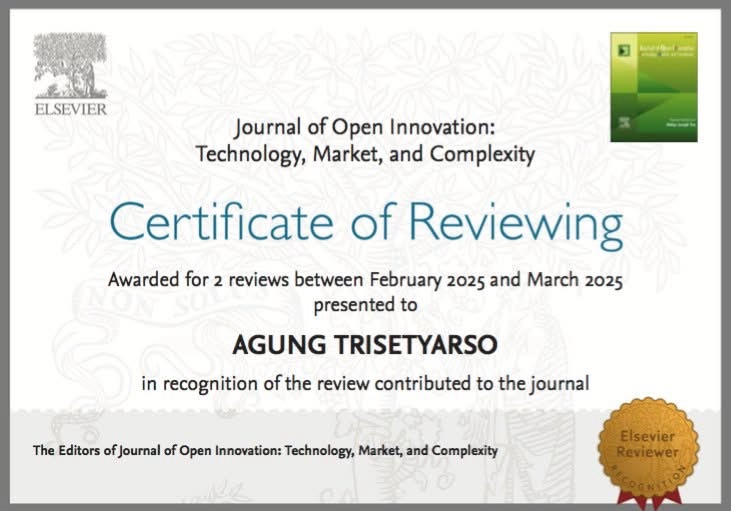
Elsevier Certificate of Reviewer on Journal of Open Innovation: Technology, Market, and Complexity (Switzerland, Q1 in three categories)

https://www.sciencedirect.com/journal/journal-of-open-innovation-technology-market-and-complexity

Elsevier Journal Reviewer

Telah Terbit: Quantum Algorithm for Recommender Systems of Disruptive Innovation

This book explores the interplay between disruptive innovations and quantum-based methodologies within the context of modern ecosystems and technological advancements. By examining cutting-edge concepts, the book provides a comprehensive framework for understanding how disruptive technologies evolve, how ecosystems adapt, and how quantum-based approaches can drive innovation and decision-making processes. The three chapters outline a progressive journey from understanding the dynamics of disruptive innovations to utilizing quantum game theory and recommender systems for fostering innovation.